


財團法人公共電視文化事業基金會 All Contents Copyright,Taiwan Public Television Service.
客服專線:(02)26332000
傳真電話:(02)26349136
114 臺北市內湖區康寧路三段75巷70號


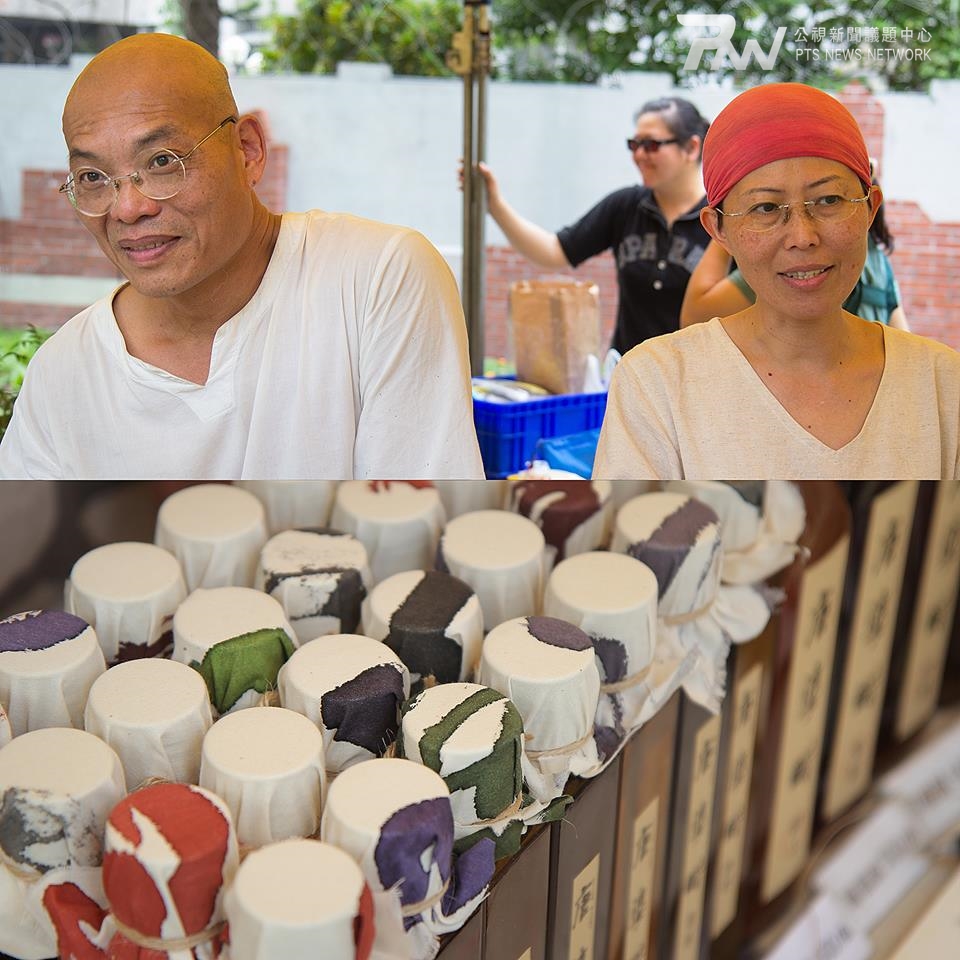
Environmental artist Lai Tang-Ya looks a bit like Gandhi: below his shaved head sits a pair of Ghandi-like glasses, and his tanned skin is covered by an ivory cotton smock. When people come to his studio to buy vinegar, holding something that looks like a dried leaf, he jokes with them saying, “Come, take a look at this garbage!” After touching the leaf, people realize that it is actually carved from a thin slice of wood. Its shape and fine veins make it look almost exactly like a real dried leaf. The wooden leaf is typical of his artwork as Lai only uses abandoned materials in his work. Besides carving discarded wood, he also makes clay art from mud and silt dug out from the bottoms of reservoirs and disaster areas hit by typhoons, using his creativity to console Taiwan’s grieving natural environment.
環境藝術家賴唐鴉的外形有點像甘地,戴著一副眼鏡,光溜溜的頭,黝黑的皮膚,穿著一件象牙色棉質的寬鬆罩衫。他開玩笑似地拿著一片乾掉的樹葉,向來買醋的人們說:「這是垃圾!來,你看看。」一摸之下,才驚覺竟是一片薄木頭雕刻出來的葉子,紋路跟形狀都像極了真的枯葉。他用廢棄的材料從事藝術創作,除了雕刻廢木材,甚至用水庫跟颱風災區的淤泥燒陶,用創作關懷台灣受傷的環境。
Lai and his wife Kao Chin-Yu make a living from producing vinegar, creating art, and arranging exhibitions. The vinegar comes from organically grown oranges in Sanxia. The reason they started making vinegar was to improve Lai’s acid reflux problem. Kao is an engineer specializing in microbiology and genetic engineering. She takes advantage of her laboratory experience in handling bacteria for the vinegar production business, adjusting and researching the process and the materials continuously. Over time, they have made a name for their brand, Tang Po Vinegar.
Lai describes Sanxia as a demure city with a rich cultural heritage. He devotes his life to uncovering the history of Sanxia so that everyone in the area can experience art and the local talent. Despite being short on budget, they have held the “Month of Mei-Shu” event for three years in a row. Li Mei-Shu (1902-1983) was a painter, professor, and county councilor who led the restoration of Sanxia’s Taoist Zushi Temple, a temple famous of sophisticated stone carving and sculpture built in 1767. They hope that the art of Li Mei-Shu can become the symbol of Sanxia. They also hope to make this event a platform for young artists to find exposure for their work and to support for their lifestyles. Lai harshly criticizes the mainstream “old-street culture.” He thinks that this culture cannot focus solely on food. Instead, it must also reflect the local history and culture. Without understanding local culture, we cannot truly talk about internationalization.
In his studio, a painting by Li Mei-Shu is displayed that features a young girl. That very same girl, now a senior citizen, taking part in the exhibition created a poignant scene reflecting the history of Sanxia.
跟太太高沁余兩人平時主要以製醋,藝術創作與策展為業,他們在三峽用自然農法種植柳丁,供釀醋使用。一開始釀醋是為了改善賴唐鴉胃酸過多的問題,高沁余以微生物與遺傳工程學家,跟她在實驗室與細菌為伍的經驗,與反覆調整研究釀醋的流程與原料,讓夫妻倆的唐婆醋漸漸作出口碑。
賴唐鴉說,三峽是一個含蓄又有內涵的城鎮,他致力於挖掘三峽的歷史,讓街頭巷弄感受到藝術跟在地才華。所以連續三年在經費短缺的狀況下,辦了梅樹月。除了希望以李梅樹的藝術作三峽的象徵外,也為新一代的藝術家提供展出作品的機會,跟協助年輕藝術家的生活來源,賴唐鴉嚴厲批判台灣當下流行的老街文化,他認為老街不能只重視吃,而是需要顯揚在地歷史與文化,沒有在地,就免談國際化。
李梅樹在數十年前畫中的少女,現在已成了一位老太太,她在梅樹月時也在親自現身展場,讓三峽的歷史留下動人的一刻。