


財團法人公共電視文化事業基金會 All Contents Copyright,Taiwan Public Television Service.
客服專線:(02)26332000
傳真電話:(02)26349136
114 臺北市內湖區康寧路三段75巷70號


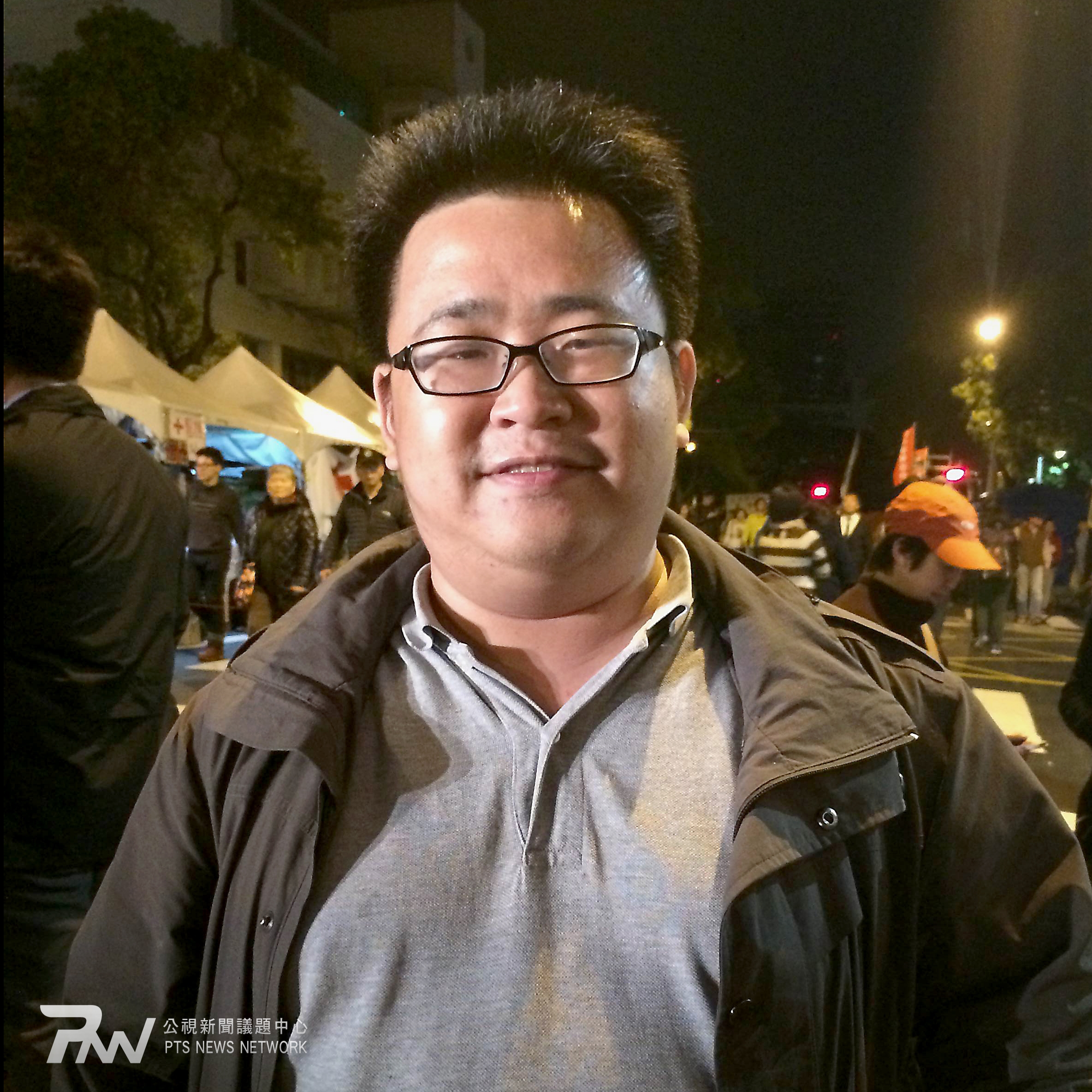
Liu Chi-Wei, a rather young looking lawyer, has been working pro bono for many big cases such as the National Alliance for Workers of Closed Factories, Hung Chung-Chiu’s death, the Dapu incident (force eviction, land grabbing, and police violence issues), and the ongoing student occupation of Legislative Yuan. For the past week, he has been giving talks on stage and standing by on site in case of emergency.
年輕的劉繼蔚律師已是許多知名案件的義務律師,包括全國關廠工人連線、洪仲丘案、大埔案、佔領立法院行動等。他也多次在立法院集會舞台發表演說與現場待命協助突發狀況。
He was interviewed in front of Chun-Hsien Building of the Legislative Yuan when asked about the possible influence of the trade pact on human rights in Taiwan. “Where should I begin?” he mused. He thought about it for a while before he spoke again. “Let’s not start by imagining what will happen if the trade pact passes. Let’s look at what has been happening.”
The protesters are trying their best to maintain a peaceful protest, Liu said, but the mudslinging pro-China media are also trying their best to depict the protest as a violent chaos, rather than reporting on the protesters’ appeal or the controversy surrounding legislative review process of the service trade agreement. The protest is critical to the development of democracy in Taiwan, especially for the younger generation. Mudslinging is undoubtedly a setback to the cultivation of awareness in citizenship.Thus it’s easy to imagine what will happen to the media when Chinese capital comes in if the trade pact passes.
Accessibility of information will be controlled by Chinese telecommunication service providers. These companies will hinder the freedom of information “in order to follow the regulations back in China and to cut the cost of developing a new system.” We won’t be able to access Facebook or look up “sensitive” keywords in search engines
As to the awareness of citizenship and social movement, Liu thinks that most of the Taiwanese people still regards these social movements an inconvenience to society, which would only bring disturbances such as traffic jam or noise pollution. This ongoing protest is an opportunity for young people who has not witnessed the Wild Lily Student Movement or earlier student movements with their own eyes to understand that voice of the people can make a difference in the government.
「這該從何說起呢?」在立法院濟南路群賢樓後方受訪時被問起服貿通過後可能對台灣人權所造成的影響時,他想了片刻之後說,「我們不要想服貿通過之後好了,我們先來想想服貿通過之前是什麼情況。」
他說,這麼盡力維持和平的運動場合,傾中的媒體都能極盡抹黑之能事詮釋成暴力無序的抗議,並且不願花篇幅陳述學生的訴求跟服貿在立院審議程序的爭議點。而這場運動對於台灣民主的發展,以及對新生代的年輕人又是何其重要,刻意抹黑這樣的運動,是對公民自主意識培養的打擊。所以一點也不難想像在服貿通過後,媒體受到中資企業的影響會有何種變化。
而對於資訊取得的箝制,也會透過中資電信業者,以「遵守母國公司法律,與節省開發第二套系統成本」為由,產生無法取得全面公開的資訊風險,像是中國無法使用臉書,無法在搜尋引擎找到敏感字。
談到本土公民意識與參與運動,劉律師認為台灣人的公民意識對運動的理解層次,大多仍停留在會對社會造成不便,害怕運動會帶來生活中的麻煩,像是交通阻塞或是噪音這類的事。這場重要的運動將會讓台灣沒有經歷過野百合或更早年代學運的年輕人,有機會見識到人民的聲音跟訴求是可以改變政府的。